

Before You Board
6 min read
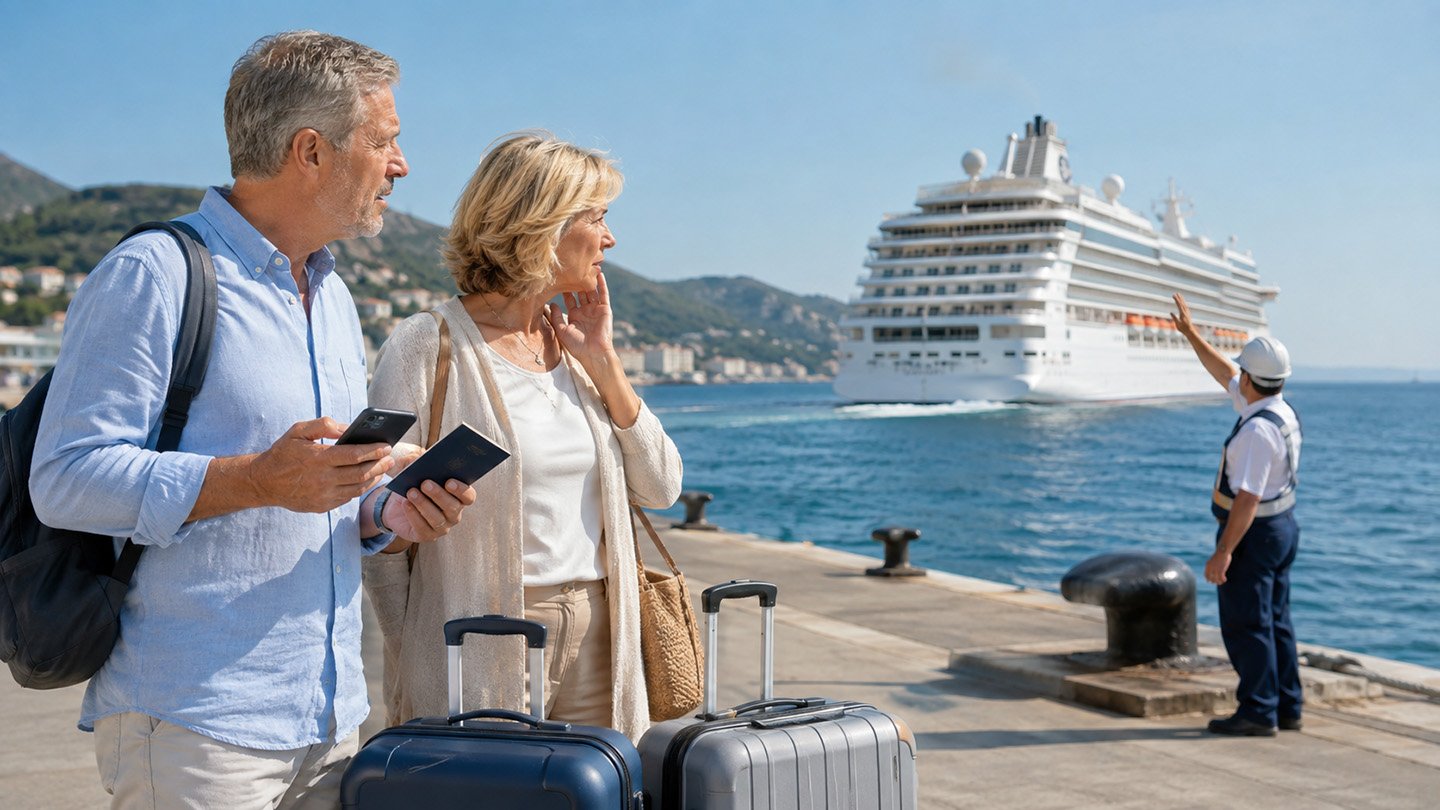
It happens for the same handful of reasons every time: a flight delay on embarkation day, traffic to the port, or — more often than people expect — misjudging how long a shore excursion would take and returning to the pier after the ship has already sailed. The uncomfortable truth is that outside of a ship-organized tour, the ship is not obligated to wait for you, and usually doesn't — the cruise contract you agreed to at booking spells this out explicitly, even though almost nobody reads that section until they need it.
If your excursion was booked directly through the cruise line, the ship will hold departure for that specific tour if it's running late — the crew knows exactly who is still out and where, because the tour operator reports back to the ship directly. Miss the ship on an independent or third-party excursion, however, and you're on your own: nobody onboard has any way of knowing why you're not back, and the itineraries of everyone else aboard, along with the ship's port schedule, docking fees, and the next port's own arrival window, don't bend for one missing cabin.
Some ports make this risk higher than others without travelers realizing it. A port where the ship anchors offshore and tenders passengers in by small boat adds an extra layer of timing risk — tender lines can back up badly in the final hour before all-aboard, and a full tender queue is not a valid excuse the ship will wait for. Ports a long way from the city center, or in places where traffic and local transport are unpredictable, carry the same risk even on a well-planned day.
If you do miss the ship, the first call is to the cruise line or the local port agent — most lines publish an emergency contact number specifically for this situation, usually printed on your boarding documents or available through the cruise line's app. They can tell you the ship's next port of call and, in some cases, help arrange transport to rejoin it there. From that point you're typically responsible for your own flights, any visa needed to enter that country independently — which matters more than travelers expect, since a visa-free arrangement as a cruise passenger doesn't always carry over to arriving independently by air — and lodging until you catch up. Costs can run from a few hundred dollars for a short domestic hop to several thousand for an international flight and unplanned hotel stay, depending on the region, how far ahead the ship has sailed, and how quickly you can arrange travel.
This is precisely the situation travel insurance with trip interruption or missed-connection coverage is built for. A policy that includes it can reimburse the flights, hotels, and rebooking costs of catching up with the ship — expenses that are otherwise entirely out of pocket, since the cruise line's responsibility generally ends at the ship's own excursions. Not every travel insurance policy covers this scenario by default, so it's worth confirming the specific wording of "missed connection" or "trip interruption" coverage before you assume you're protected.
A realistic scenario makes this concrete. Picture a couple who books a half-day independent tour to a waterfall an hour from port, budgeting exactly enough time to return by all-aboard. A delay on the road back — traffic, a flat tire, nothing dramatic — puts them at the pier fifteen minutes after the gangway has closed. The ship has already sailed. This is the single most common way people miss the ship: not a wild mishap, but an itinerary with no slack built in meeting one ordinary delay.
Filing an insurance claim after a missed-ship event typically requires documentation: receipts for the replacement flights and any hotel stay, and often a report or letter from the tour operator or local authority confirming the circumstances of the delay. Keeping receipts and any relevant documentation from the moment you realize you'll miss the ship makes the claims process considerably smoother than trying to reconstruct it after the fact.
Some cruise lines will attempt to help you rejoin even without a formal obligation to do so — assisting with logistics, providing the next port's agent contact, or in some cases arranging transport as a goodwill gesture, particularly if the delay was clearly outside your control. This isn't guaranteed and shouldn't be assumed, but it's worth asking directly rather than assuming you're entirely on your own. The single biggest factor in how badly a missed sailing affects your trip is simply how many sea days follow before the next port — a ship with a sea day right after the missed port gives you more time to arrange travel and catch up than one that reaches a difficult-to-fly-into port the very next morning.
Travel insurance is worth buying close to your deposit date rather than waiting until just before departure — many policies' better benefits, including a "cancel for any reason" upgrade, are only available if purchased within a specific window after your initial trip deposit, and that window closes well before the cruise itself.
None of this is meant to make independent excursions sound reckless — most days, most ports, nothing goes wrong, and the overwhelming majority of independent excursions return with time to spare. It's simply worth knowing, before you're standing on a dock watching your ship's stern disappear, exactly what happens next, who is and isn't responsible for getting you back onboard, and what a small amount of planning and the right insurance policy can do to make sure it's never more than an interesting story after the fact.
Keep reading
More from the Journal.
How Gratuities Work on a Cruise — and Whether to Pre-Pay
Read the article

River, Ocean, and Expedition Cruises — What's the Difference?
Read the article

Ship Tour vs Independent Excursion — Which Should You Book?
Read the article